

Most reviews of Smart Water Box online fall into one of two categories. They either read like the sales page (everything is amazing, urgency, “act now”), or they’re written by people who clearly never opened the product. This review is neither.
What follows is an honest breakdown of what Smart Water Box actually is, what you get when you buy it, what it does well, where it falls short, and most importantly who should and shouldn’t buy it. If you’re researching this product because you’re seriously considering water independence, this should answer your real questions before you spend a dollar.
For the broader context on why water-from-air technology matters in the first place, our complete guide to water from air sets the stage. This review assumes you already know the basics.
The Verdict:
- Smart Water Box is a DIY blueprint, not a finished product. You build the system using the parts list and instructions provided.
- The system is a small-scale atmospheric water generator capable of 2–10 gallons/day in moderate humidity.
- At ~$39, it’s significantly cheaper than buying a commercial AWG ($1,500+).
- Best for: hands-on homeowners, off-grid families, preparedness-minded readers willing to build something with their hands.
- Not for: people expecting a plug-and-play appliance, anyone in extremely dry climates, or those without basic DIY skills.
What Smart Water Box Actually Is
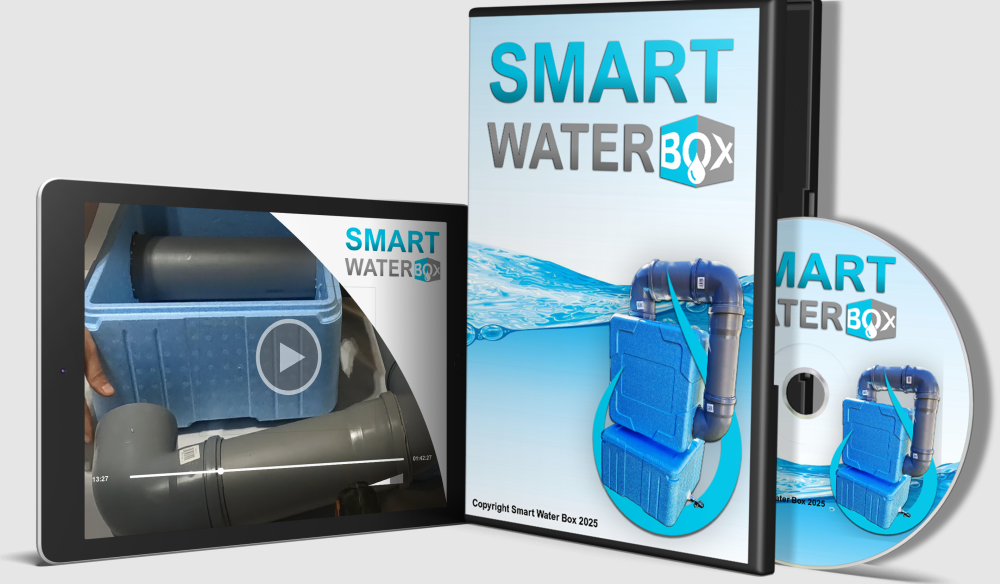
The marketing language uses words like “system” and “blueprint” interchangeably, which can confuse first-time buyers. Here’s the plain version: Smart Water Box is a digital guide. You receive a downloadable package containing build instructions, a parts list, sourcing recommendations, and walkthrough videos. You then assemble the unit yourself using parts you can typically source from a hardware store or online for $200–$400 in addition to the guide price.
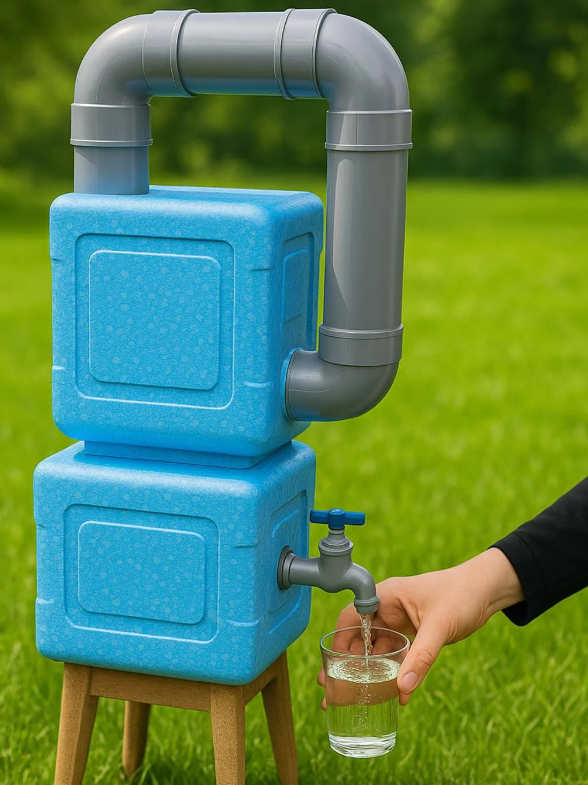
The end product is a compact atmospheric water generator — a small box that pulls humid air across a refrigerated coil, condenses water vapor, runs it through a multi-stage filter, and delivers clean drinking water. It’s the same fundamental engineering principle as any commercial AWG, just packaged for someone willing to do the assembly.
How the System Works
The build follows a simple but effective design. A fan draws ambient air across a cold coil (powered by a small refrigeration unit). Water vapor condenses on the coil, drips into a collection tray, and gravity-feeds through a carbon filter and a polishing stage before reaching the output spout. The whole unit is roughly the size of a small dorm fridge and runs on standard 120V power, though the guide includes notes for solar-compatible variants.
This isn’t proprietary technology. The same physics powers the dehumidifier in your basement. What the blueprint provides is the specific component selection, the cooling-stage tuning, and the filtration stack that makes the output drinkable rather than just collected. That said — if you’re curious about whether to skip the blueprint and design your own, the broader principles are covered in our water-from-air guide.
Get the full DIY build plan to generate water yourself: blueprint, step-by-step instructions, and the complete parts list.
What You Get When You Buy
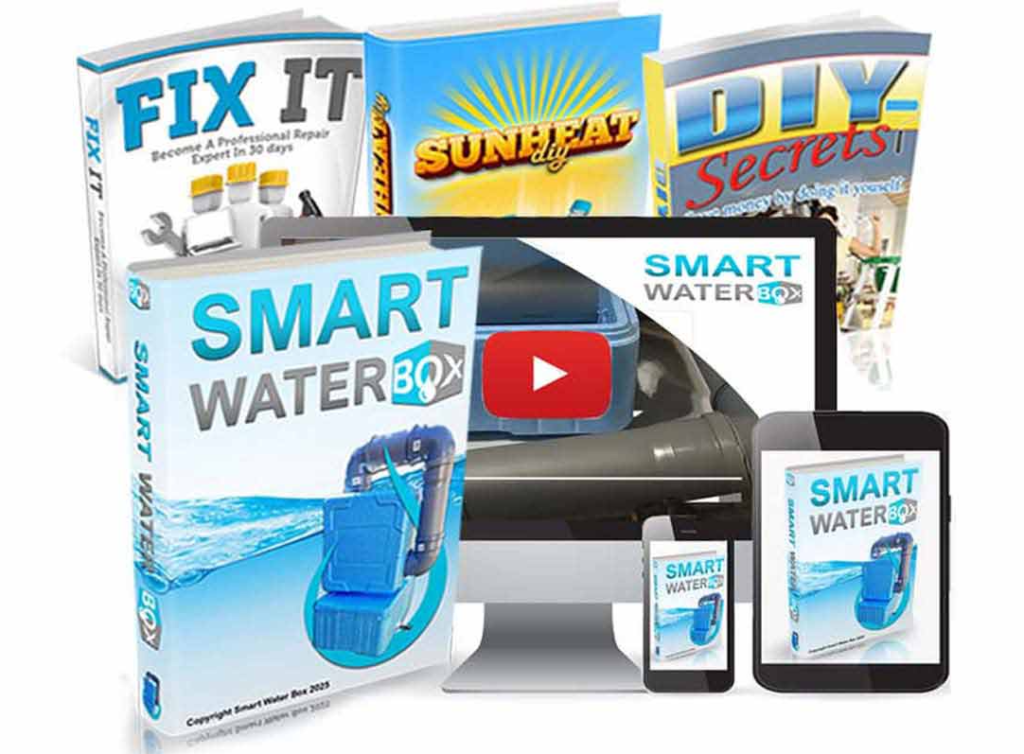
The package is digital. Within minutes of purchase, you receive download access to the main build guide (PDF, around 80 pages with diagrams), a parts-and-sourcing list with current price estimates, supplementary video walkthroughs of the trickier assembly steps, and a small library of bonuses covering related preparedness topics. Total file size is modest — you’re not getting hours of bloated video content, which is a positive.
The guide is well-organized and reasonably written. It assumes basic comfort with hand tools and electrical wiring, but doesn’t require advanced skills. Most users report assembly takes one to two weekends. Customer support is via email, which is slower than ideal but generally responsive.
Real Performance: Yields and Conditions
Yields depend heavily on your climate. In moderate humidity (50–70%) and warm temperatures (75–85°F), the standard build produces 5–8 gallons per day reliably. In coastal or tropical conditions (humidity 70%+), output climbs to 8–12 gallons. In arid regions (below 30% humidity), expect 2–4 gallons or less, which may not justify the build.
The honest summary: Smart Water Box performs well in moderate-to-humid climates, marginally in dry ones, and not at all if you’re not willing to build it.
Power consumption runs around 200–400 watts continuously while operating. On grid power, that’s roughly $1–$2 per day in electricity. On solar, the unit pairs well with a 600–800W panel array and modest battery storage.
Pros (Honest List)
- Massive cost savings vs. commercial units. A comparable commercial AWG runs $1,500–$3,000. Smart Water Box plus parts comes in under $500 total.
- You understand the system. When something needs maintenance, you know exactly what’s inside and how to fix it. No black-box service contracts.
- Modular design. Components are off-the-shelf — easy to source replacements, upgrade specific stages, or scale up.
- Solar-compatible. The guide explicitly covers off-grid power configurations.
- Genuine educational value. Even if you never build it, the guide teaches you enough about AWG technology to evaluate other products fairly.
Cons (Also Honest)
- You have to actually build it. If you’re not willing to spend a weekend assembling components, this isn’t for you.
- Not optimized for arid climates. Below 30% humidity, the standard design underperforms. The guide notes this but doesn’t fully solve it.
- Parts list assumes US sourcing. International builders may need to adapt component recommendations.
Get the full DIY build plan to generate water yourself: blueprint, step-by-step instructions, and the complete parts list.
Who Should Buy It (and Who Shouldn’t)
Buy this if: you’re a hands-on homeowner or homesteader, you live in a moderate-to-humid climate, you want to understand the system you’re depending on, and you want to spend $400 instead of $2,000 on water independence. Also buy if you’re preparedness-minded and want a documented backup that doesn’t depend on external supply chains.
Don’t buy this if: you want a plug-and-play appliance you can unbox and run, you live in a desert climate where yields will be poor, or you don’t have the time, tools, or interest to assemble components. In those cases, a commercial unit (despite the higher price) is the right call.
What It Costs
The blueprint itself runs around $39 at the time of writing, with occasional discounts and bundle offers. Parts and components for the build typically come to $200–$400 depending on your sourcing and any upgrades. Total realistic investment: $250–$450 for a functional household unit.
Compare that to a commercial atmospheric water generator producing similar yields: $1,500 minimum, often $2,500–$3,500. The savings are substantial, and the trade-off is your time.
Your complete DIY plan: parts list, step-by-step instructions, and the cooling-stage design used by readers who built their own.
Frequently Asked Questions
Is Smart Water Box a scam?
No. The marketing is aggressive and the sales page leans heavily on fear and urgency, which is genuinely off-putting. But the product behind that copy is real, the build instructions work, and people who follow them get a working unit. The product and its packaging are different things.
How long does it take to build?
Most users report 8–16 hours of total build time, typically spread across one or two weekends. Sourcing parts adds another day or two of waiting for shipping. Plan for 1–2 weeks from purchase to first water.
Do I need to be an engineer or technician?
No, but you need basic comfort with hand tools, basic electrical work (level of difficulty: replacing a light switch), and the patience to follow detailed instructions. If you’ve ever assembled IKEA furniture and replaced an outlet, you have the skills.
Is there a money-back guarantee?
Yes. Smart Water Box is sold via ClickBank, which has a standard 60-day money-back guarantee on all products. If you decide it’s not for you, refunds are straightforward.
What happens if I get stuck during the build?
Email support from the team is available, though response times can run 1–3 business days. There’s also a buyer community where people troubleshoot together. Most issues are common and easily resolved by referring back to the videos.
The Verdict
Smart Water Box is a legitimate, useful product packaged inside marketing copy that makes it look less legitimate than it is. The blueprint works. The technology is real. The cost savings versus commercial units are substantial. The trade-off is your time and willingness to build something with your hands. If that trade-off works for you, this is one of the cheapest paths to actual water independence available right now. If it doesn’t, a commercial unit is worth the higher price.
For the broader water-independence picture, see our Off-Grid Water Systems Hub, Survival & Preparedness Hub, and Water Quality Hub. If you want to test the concept first before committing to a build, start with our walkthrough on emergency water sources you can actually use.
Leave a Reply