
⚡ Quick Answer
Atmospheric water generator prices range from $150–$450 for a DIY build, $500–$3,500 for a residential-grade commercial unit, and $5,000–$100,000+ for industrial systems. The most cost-effective entry point for most households in 2026 is a tested DIY blueprint (under $500 all-in) or a mid-range residential unit in the $1,000–$2,500 range. Sticker price alone is a misleading metric — total 5-year cost of ownership, including electricity and filter replacements, is what actually determines value.
Key Takeaways
- DIY build: $150–$450 in parts + blueprint ($30–$60) = under $500 all-in
- Entry-level commercial residential AWGs: $500–$1,500
- Mid-range residential (3–10 L/day): $1,500–$3,500
- Premium and solar-powered: $2,000–$7,000+
- Hidden ongoing costs: electricity ($50–$180/year), filter replacements ($50–$120/year)
- 5-year cost of ownership often makes the DIY route 40–60% cheaper than an equivalent commercial unit
AWG pricing causes more confusion than almost any other category in the home water independence space. The confusion comes from one source: people mix DIY builds, compact residential units, and large commercial systems into one mental bucket and then try to make sense of prices that range from $150 to $150,000. These are not the same product.
This guide separates the price tiers clearly, breaks down what drives cost differences within each tier, and runs the 5-year ownership math so you can compare options on equal footing. For the broader question of whether the technology is worth the investment at all, the complete AWG value analysis covers that in detail.
AWG Price Tiers: The Lay of the Land
| Tier | Price Range | Typical Output | Best For |
|---|---|---|---|
| DIY build (parts only) | $150–$450 | 1–8 L/day | Hands-on builders in humid climates; off-grid setups |
| DIY build + validated blueprint | $200–$510 | 2–8 L/day | First-time builders who want predictable results |
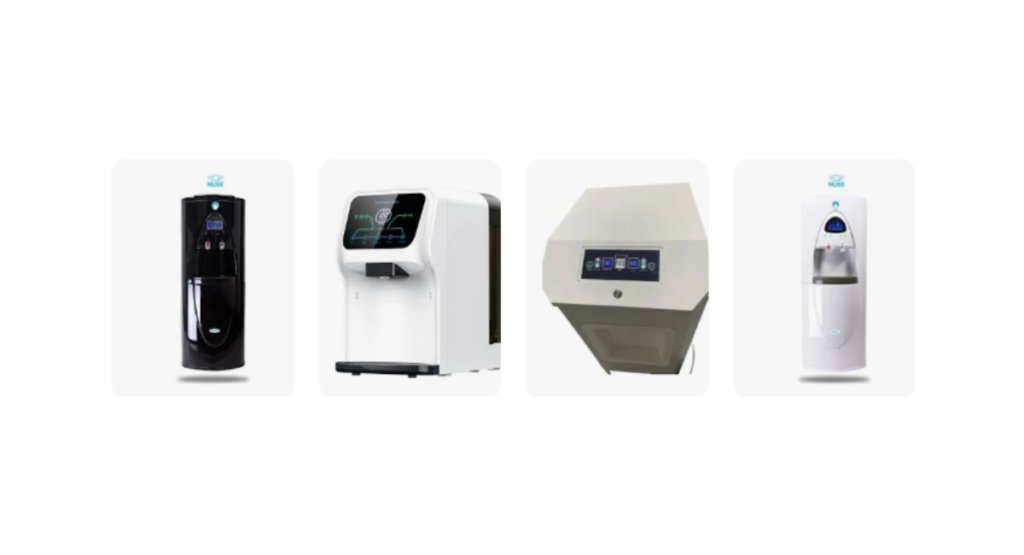
| Entry-level commercial residential | $500–$1,500 | 2–5 L/day | Plug-and-play buyers with limited DIY interest |
| Mid-range residential | $1,500–$3,500 | 5–15 L/day | Family-sized daily water supplement |
| Premium residential / solar | $2,000–$7,000+ | 3–10 L/day | Off-grid or zero-grid homes; solar-powered independence |
| Light commercial | $5,000–$20,000 | 50–200 L/day | Small offices, community buildings, disaster relief |
| Industrial | $20,000–$100,000+ | 500+ L/day | Municipal, military, large-scale humanitarian |
What Drives AWG Price Differences
Within each tier, four engineering factors account for most of the price variation:
1. Compressor Size and Output Capacity
Output capacity scales roughly with compressor power. A 1/8 HP (93W) compressor at 72°F (22°C) and 65% RH produces about 2–3 litres per day. A 1/2 HP (373W) compressor in the same conditions produces 8–12 litres. Compressor cost scales non-linearly — a 1/2 HP unit costs roughly 4× a 1/8 HP unit, but the larger unit does not cost 4× more to run since condensation efficiency improves with scale.
2. Filtration Certification Level
Commercial units that carry NSF/ANSI 42, 53, or 55 certifications for their filtration components have been independently tested by NSF International to verify contaminant reduction claims. NSF-certified filtration adds $100–$300 to a residential unit’s price but provides meaningful assurance that filter performance matches the label. DIY builders can achieve equivalent performance with NSF-certified cartridge replacements sourced from plumbing supply houses.
3. Power Supply Design
Mains-only units are the cheapest to manufacture. Units with built-in solar charging circuitry, MPPT charge controllers, and LiFePO4 battery integration add $300–$1,500 to the price depending on battery capacity. The U.S. Department of Energy notes that a properly sized solar-plus-storage system for a small AWG typically costs $400–$800 in components if built separately — roughly comparable to the premium charged for integrated solar-capable units.
4. Build Quality and Warranty
Commercial units from established brands carry 1–3 year warranties and use stainless-steel internal surfaces, food-grade tubing throughout, and industrial-grade compressors rated for 30,000+ hours. These components add cost but reduce lifetime ownership expense. A $2,500 commercial unit with a 3-year warranty and a 10-year service life has a lower cost-per-litre than a $600 entry-level unit that requires a compressor replacement at year 4.
DIY Build Cost: The Real Numbers
I have broken down DIY AWG parts costs in detail in the how-to-build guide. The summary for this pricing article:
| Cost Category | Low End | High End |
|---|---|---|
| Refrigeration sub-system (new) | $100 | $165 |
| Filtration sub-system (new) | $55 | $95 |
| Collection tank and enclosure | $35 | $65 |
| Electrical (fan, wiring, fuses) | $25 | $45 |
| Blueprint or plans | $0 | $60 |
| Tools (if purchasing new) | $60 | $120 |
| Total (first build) | $275 | $550 |
| Total (repeat build, tools amortised) | $215 | $430 |
The naïve comparison is sticker price: $275–$430 DIY versus $600–$3,000 commercial. But sticker price ignores the 15–25 hours of build time. If you value your time at $20/hour, a 20-hour build adds $400 of implicit labour cost — pushing the true first-build cost to $650–$800. A commercial plug-and-play unit at $800–$1,200 starts to look competitive when labour is factored in honestly.
The counter-argument: many builders report genuine enjoyment of the build process and see the time as education, not cost. It is a personal calculation, not a universal one.
For the builders reading this: Curious what it actually takes to build an Atmospheric Water Generator?
There’s a documented DIY blueprint for a household-scale atmospheric water generator: parts list, wiring, the cooling-stage design, and the filter stack that makes the water actually drinkable. Most readers finish the build in one or two weekends. Worth a look before deciding if it’s a fit for you.
Commercial Residential AWG Prices in 2026
The residential AWG market has expanded considerably since 2020, with units now available from manufacturers in the U.S., Israel, Canada, and Australia. General price observations for mid-2026:
| Unit Category | Typical Price Range | Typical Output at 80°F / 70% RH | Notes |
|---|---|---|---|
| Countertop (Peltier-based) | $300–$700 | 0.5–2 L/day | Very low output; convenient form factor; suitable as supplement only |
| Compact compressor (residential) | $600–$1,500 | 3–8 L/day | Most popular residential category; compressor-based; operates 65–100°F (18–38°C) |
| Mid-range compressor (family-sized) | $1,500–$3,500 | 8–20 L/day | Suitable for primary supplemental source; built-in 5-stage filtration common |
| Solar-hybrid residential | $2,000–$6,000 | 4–12 L/day | Integrated solar + battery; higher upfront, near-zero electricity running cost |
Note that output claims from commercial manufacturers are typically stated at reference conditions of 86°F (30°C) and 80% RH. In moderate U.S. inland climates — say, 75°F (24°C) and 55% RH — real-world output is typically 40–60% below the rated figure. Always ask for or look up performance curves at your expected ambient conditions, not just the peak rating.
Hidden Ongoing Costs: What the Sticker Price Does Not Include
Both DIY and commercial AWG ownership includes ongoing costs that most buyers either overlook or underestimate.
Electricity
A 1/8 HP compressor-based AWG draws roughly 90–120W continuously. At the U.S. average residential electricity rate of $0.17/kWh (per the U.S. Energy Information Administration Monthly Electric Power Survey), that equals $4.00–$5.30 per month, or $48–$64 per year. Mid-range commercial units drawing 200–400W cost $95–$190 per year in electricity. Premium solar-hybrid units with adequate battery capacity can reduce electricity costs to near zero.
Filter Replacements
A three-stage sediment-carbon-UV filter stack requires cartridge replacements every 3–6 months. Annual filter replacement costs for a DIY build run $50–$100 depending on cartridge brand. Commercial unit filter kits, which are often proprietary, run $60–$150 per year. UV lamp replacement (annual) adds $15–$40 for DIY builds; commercial UV lamp replacements from the unit manufacturer typically cost $25–$60.
Installation (Commercial Units Only)
Commercial units requiring hardwired electrical connections or permanent plumbing integration typically cost $150–$350 to install professionally. Portable or countertop units that plug into a standard 120V outlet require no installation cost. This one-time cost is worth factoring into the total first-year cost of ownership.
5-Year Cost of Ownership: DIY vs. Commercial
Using conservative mid-range assumptions (moderate humidity climate, average U.S. electricity rate of $0.17/kWh, 2 L/day output from a small unit):
| Cost Item | DIY Build | Entry Commercial ($800) | Mid-Range Commercial ($2,000) |
|---|---|---|---|
| Upfront hardware cost | $350 | $800 | $2,000 |
| Blueprint / setup | $50 | $0 | $0 |
| Year 1 electricity | $55 | $65 | $110 |
| Year 1 filters + UV lamp | $90 | $120 | $140 |
| Years 2–5 electricity | $220 | $260 | $440 |
| Years 2–5 filters + UV lamp | $300 | $400 | $480 |
| 5-Year Total | $1,065 | $1,645 | $3,170 |
| Cost per litre (5-year basis) | $0.44/L | $0.68/L | $1.31/L |
The mid-range commercial unit delivers higher output (10–15 L/day vs. 2–3 L/day for the small DIY build), so a direct cost-per-litre comparison requires normalising for output. The point of the table is directional: the DIY route delivers the lowest cost-per-litre at the small-unit scale, while a mid-range commercial unit delivers better value at the family-sized output scale. Neither is objectively “better” — the right choice depends on your output requirement and your willingness to invest build time.
For the builders reading this: Curious what it actually takes to build an Atmospheric Water Generator?
There’s a documented DIY blueprint for a household-scale atmospheric water generator: parts list, wiring, the cooling-stage design, and the filter stack that makes the water actually drinkable. Most readers finish the build in one or two weekends. Worth a look before deciding if it’s a fit for you.
Where the Smart Water Box Blueprint Fits on the Price Spectrum
The Smart Water Box is a DIY blueprint — not a pre-built unit. It sits at the low end of the price spectrum: parts cost $200–$400, the blueprint itself carries a modest one-time price, and the resulting unit delivers output comparable to entry-level commercial units at a fraction of the 5-year cost. The full review covers exactly what is in the blueprint, what builders report about output in real climate conditions, and whether the instructions are genuinely accessible to a first-time builder.
Want the Lowest 5-Year Cost Per Litre?
The Smart Water Box blueprint produces entry-commercial-grade output at DIY parts prices. See what is included, what real builders paid, and whether it fits your climate and budget.
Where to Go Next
- Residential Atmospheric Water Generator Buyer’s Guide — deep-dive comparison of commercial residential units
- Are Atmospheric Water Generators Worth It? — the honest value framework including electricity costs and break-even analysis
- Best Off-Grid Water Systems Compared — how AWG price compares to rainwater, well, and cistern alternatives
Frequently Asked Questions
What is the cheapest atmospheric water generator that actually works?
The cheapest functional AWG is a DIY build using a salvaged mini-fridge compressor, which can be assembled for $80–$120 in parts. This single-stage design without UV filtration is not recommended for daily drinking water but works for emergency water collection in humid environments. A properly filtered DIY build — the crème de la crème of the budget tier — costs $200–$350 and delivers safe drinking water. The cheapest commercial unit that includes NSF-certified filtration and produces reliable output starts around $600.
Why are some atmospheric water generators so expensive?
High prices reflect output capacity, build quality, and certification. A $20,000 commercial unit produces 200+ litres per day using industrial-grade compressors, stainless-steel internals, and NSF-certified multi-stage filtration. It is engineered for continuous operation in outdoor environments, carries regulatory approvals for drinking-water production in multiple countries, and comes with manufacturer service contracts. Comparing it to a $400 DIY build is vis-à-vis a pickup truck and a bicycle — different tools for different scales.
Do cheaper AWGs produce safe drinking water?
Price does not determine water safety — filtration design does. A $300 DIY build with a properly specified 3-stage filtration stack (sediment + activated carbon + UV at 40 mJ/cm²) produces water that meets the WHO Guidelines for Drinking-water Quality for microbial and common chemical parameters. A $1,500 commercial unit with a poorly maintained filter that has not been replaced in 18 months may deliver worse water quality. Maintenance discipline matters more than purchase price.
Is a solar-powered atmospheric water generator worth the extra cost?
In off-grid contexts, yes — the elimination of grid electricity cost offsets the premium within 3–5 years depending on your electricity rate and daily output. At a $0.17/kWh average U.S. rate, a small 100W AWG costs roughly $150/year in electricity. A solar-plus-storage add-on costing $500–$700 breaks even in 3–5 years and then runs essentially free. In on-grid urban contexts where the goal is supplemental water rather than full energy independence, the solar premium is harder to justify on economics alone.
How does AWG water cost compare to bottled water?
Bottled water in the U.S. costs $1.00–$3.50 per litre at retail. A well-maintained DIY AWG operating in moderate humidity conditions produces water at $0.30–$0.60 per litre on a 5-year total-cost basis (hardware + electricity + filters). Mid-range commercial units produce water at $0.80–$1.50 per litre on the same basis — still typically below single-serve bottled water prices. The EPA’s drinking water and bottled water comparison guidance notes that municipal tap water costs roughly $0.002 per litre — AWG is not a cost-cutting strategy vis-à-vis tap water; its value proposition is independence and resilience.
For the builders reading this: Curious what it actually takes to build an Atmospheric Water Generator?
There’s a documented DIY blueprint for a household-scale atmospheric water generator: parts list, wiring, the cooling-stage design, and the filter stack that makes the water actually drinkable. Most readers finish the build in one or two weekends. Worth a look before deciding if it’s a fit for you.
Leave a Reply