
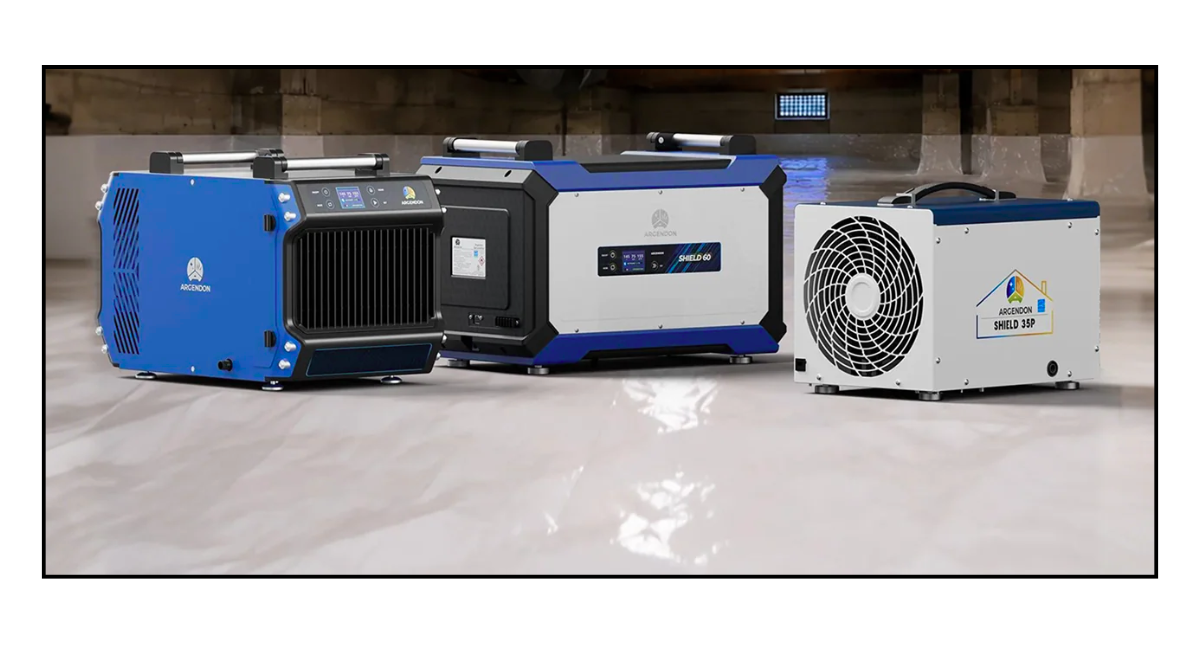
Quick Answer: For a typical unfinished basement of 500 to 1,500 sq ft in a moderately damp climate, a 30 to 50 pint unit under the current DOE 2019 test standard is the right starting capacity. Size up one tier if your basement sits fully below grade, has a history of water intrusion, or reads above 70% RH in summer. The two non-negotiable features for basement use are a continuous drain option (gravity hose or built-in condensate pump) and a minimum operating temperature below 55°F/13°C if your basement drops seasonally. Reservoir-only units will fill overnight and shut off, leaving humidity uncontrolled for hours before you notice.
Key Takeaways
- The DOE updated its pint-capacity test standard in 2019: the old 45-pint label is today’s 30-pint. Never match the pint number on a unit you are replacing; always size to the table below.
- Basements require continuous drain capability. Any unit without a gravity drain hose outlet or built-in condensate pump is not suitable for permanent basement installation.
- ENERGY STAR certified models use 13 to 30% less electricity than the federal minimum; at 10 to 14 hours of daily operation through a humid summer, the savings range from $60 to $100 per season.
- If your basement temperature drops below 55°F/13°C in winter, compressor units ice up and lose most of their rated capacity; a desiccant unit rated to 33°F/1°C is the correct choice for cold-climate basements.
- Oversizing is preferable to undersizing in basements: a larger unit reaches target humidity and cycles off; an undersized unit runs at full power indefinitely without closing the gap.
I tested my first basement dehumidifier in 2019, the same year the DOE changed the pint-capacity test standard, and I did what most buyers do: I matched the pint number on the old unit I was replacing. The new 50-pint unit ran flat-out through July and August and never brought the basement below 65% RH. It took me two weeks and a conversation with an HVAC technician to understand what happened. The old 50-pint label was rated under warmer test conditions; under the new standard, that same unit would have been labeled roughly 35 pints. I had undersized by nearly a full tier. This guide is the information I wish I had found before making that purchase.
Basements dehumidify differently from living spaces, and the standard buying advice, check the square footage and match a pint rating, misses the three variables that actually determine whether a unit will keep up. This guide walks through all three.
Why Basements Are the Hardest Dehumidification Challenge
A bedroom at 65% RH and a basement at 65% RH are very different problems. Basements accumulate moisture from four sources that living spaces do not face in combination.
1- Ground Moisture Transmission
Concrete is porous. Below-grade walls and floor slabs transmit moisture from the surrounding soil continuously, even in dry climates. The rate varies with soil moisture content, hydrostatic pressure, and whether the exterior foundation was properly waterproofed at construction. In older homes, it rarely was. This means the dehumidifier is fighting a source of moisture that is physically embedded in the structure, not just ambient outdoor humidity that you could limit by keeping windows closed.
2- The Humidity Gradient Effect
Warm, humid outdoor air in summer is cooled when it enters a basement, and cooler air holds less moisture. The moisture drops out as condensation on cold surfaces: pipes, the exterior of the concrete wall, and the floor slab. Every time you open the basement door in July, you are importing a load of moisture that condenses within seconds of contacting the cool surfaces below. The EPA’s mold prevention guidance identifies this stack-effect condensation as one of the primary drivers of basement moisture problems in humid climates.
3- Low Temperatures That Limit Compressor Performance
Standard compressor-based dehumidifiers are rated at 65°F/18.3°C and 60% RH under the DOE 2019 test standard. Real basements in the northern U.S. and in unheated applications regularly drop below 55°F/13°C in winter, and at those temperatures a compressor unit’s evaporator coil ices up, reducing capacity to near zero and triggering a defrost cycle. The unit keeps running, drawing power, while removing almost no moisture. If your basement stays above 65°F/18°C year-round, this is not a concern. If it does not, the cold-temperature rating matters more than the pint label.
4- High Operating Hours
A bedroom dehumidifier might run 4 to 6 hours a day in summer, cycling on when the room warms up from body heat and cycling off quickly. A basement unit in a humid climate runs 10 to 16 hours per day through June, July, and August. At that duty cycle, cheap components fail faster, energy costs add up to $80 to $150 per season difference between an ENERGY STAR certified unit and one that just meets federal minimums, and build quality shows. The brand premium is more defensible in basement units than anywhere else in this product category.
How to Size a Basement Dehumidifier Correctly
The correct sizing process has three steps, and the square footage number is only one of them. Skipping the other two is how buyers end up with undersized units.
Step 1: Measure the space in square feet. For a rectangular basement, this is length times width. For irregular shapes, break it into rectangles and add the areas.
Step 2: Assess the moisture load. Four descriptors cover most situations. Moderately damp means 50 to 60% RH with occasional musty smell. Very damp means 60 to 70% RH with consistent musty odor and visible condensation on cold surfaces. Wet means 70% RH or above with seepage through walls or floor during rain. Very wet means standing water after heavy rain or persistent seepage regardless of weather.
Step 3: Apply the below-grade adjustment. Any basement fully below grade (all walls below ground level) should size up one tier from the table below, because ground moisture transmission is continuous and cannot be controlled by ventilation.
| Space | Moisture Load | Capacity (DOE 2019) | Below-Grade Adjustment |
|---|---|---|---|
| Up to 800 sq ft | Moderately damp (50–60% RH) | 20–25 pints | Size up to 30 pints |
| Up to 800 sq ft | Wet / Very wet (70%+ RH) | 30 pints | Size up to 35–40 pints |
| 800–1,500 sq ft | Moderately damp | 30 pints | Size up to 40–45 pints |
| 800–1,500 sq ft | Wet / Very wet | 45–50 pints | Size up to 50–60 pints |
| 1,500–2,500 sq ft | Any condition | 50–70 pints | Size up to 70 pints |
| 2,500+ sq ft | Any condition | 70+ pints (ducted unit) | Consider whole-house system |
A practical note on the DOE 2019 standard: if you are replacing a unit purchased before June 2019, do not match the old pint number. Add roughly 30 to 40% to find the equivalent new-standard capacity. A unit labeled 70 pints in 2017 is roughly equivalent to a 45 to 50 pint unit sold today.
Features That Actually Matter in a Basement Unit
1- Continuous Drain (Non-Negotiable)
A standard reservoir holds 1.0 to 1.8 gallons and fills in 8 to 12 hours at 70% RH in a 1,000 sq ft basement. When it fills, the unit shuts off automatically and humidity rises again until you manually empty it. For a basement you visit once a day or less, that means hours of uncontrolled humidity daily. Every basement dehumidifier should drain continuously, either through a gravity hose to a floor drain (the unit must sit elevated, typically 4 to 6 inches above the drain) or through a built-in condensate pump that pushes water upward to a utility sink or laundry drain. The pump version is more flexible but adds a mechanical component that can fail; gravity drain is simpler and more reliable if you have a floor drain at the right height.
2- ENERGY STAR IEF Rating
The Integrated Energy Factor (IEF) measures liters of water removed per kilowatt-hour of electricity at the DOE 2019 test conditions. ENERGY STAR certified units must meet a minimum IEF of 1.77 L/kWh for units under 25 pints and 2.25 L/kWh for units 25 to 75 pints. In a basement running 12 hours per day for 90 days, the difference between a certified and non-certified 50-pint unit amounts to roughly 80 to 120 kWh, or $12 to $18 at average U.S. electricity rates. Over a 5-year unit life, that is $60 to $90 in savings plus the federal energy star rebate some utilities offer.
3- Low-Temperature Operating Range
For basements that drop below 55°F/13°C between November and March, check the minimum operating temperature in the product specifications, not the marketing copy. Most portable compressor units list 41°F/5°C as the minimum, but capacity at that temperature is substantially below the rated 65°F/18°C output. Units with an auto-defrost function maintain some operation in cold conditions; units without it simply ice up and stop working. If your basement is genuinely cold in winter, either choose a desiccant unit (rated to 33°F/1°C with no capacity loss) or accept that a compressor unit will be ineffective during cold months and plan accordingly.
4- Digital Humidistat Accuracy
The humidistat controls when the unit cycles on and off. A unit with a poorly calibrated humidistat will either run continuously (believing humidity is still above target) or cycle off prematurely (reading the area near its sensor, which may differ from the room average). Better units display the current measured RH alongside the target set point; this lets you verify the reading against an independent hygrometer. A $12 standalone hygrometer placed in the center of the basement is an inexpensive way to check whether your dehumidifier’s humidistat is accurate.
Top Picks by Capacity Tier (2026)
I am not recommending specific Amazon listings because product availability and pricing change constantly. Instead, these are the model families I have tracked over multiple buying cycles that have maintained consistent performance ratings and availability. Verify current pricing and reviews before purchasing.
- 30 Pint Tier: Smaller Finished Basements (Under 800 sq ft, 65°F+ Year-Round)
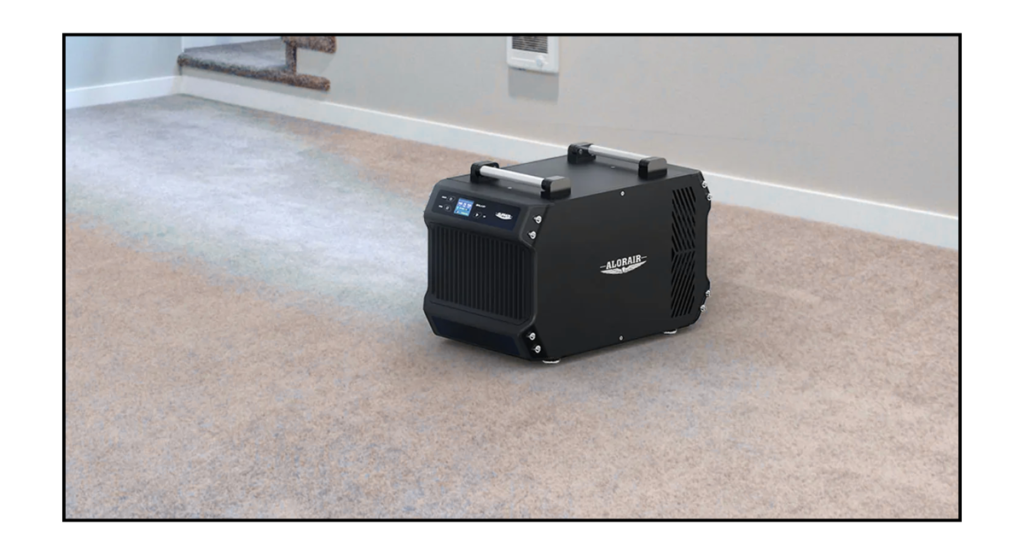
The Midea and Frigidaire 35-pint families consistently dominate this tier. Both are ENERGY STAR certified, carry built-in auto-defrost, and offer continuous drain hose connections. The Midea MAD35C1YWS earns particular attention for its low noise output (48 dB on low) and compact footprint; useful in finished basements where aesthetics matter. The Frigidaire FFAD3533W1 has slightly better documented reliability data in aggregate user reviews across three model years.
What to avoid at this tier: units from brands with no established service network or parts availability. A dehumidifier running 10 hours a day for 5 months per year puts 1,500 hours per season on the compressor. Reliability data matters here more than initial price.
- 50 Pint Tier: Most Typical Unfinished Basements (800–1,500 sq ft)
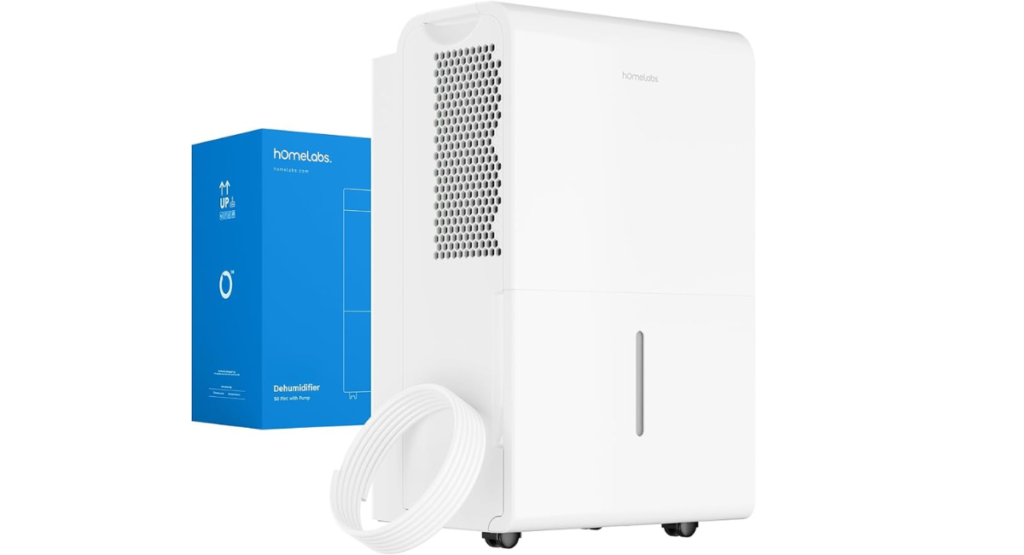
This is the highest-volume tier and the most competitive. The hOmeLabs 4,500 sq ft unit and the Frigidaire FFAD5033W1 are the most widely reviewed options with the largest reliability datasets. The Aprilaire 1850F deserves mention here for its superior build quality and a 5-year warranty that is genuinely better than the 1 to 2 year warranties in this tier from mass-market brands. The price premium is roughly $100 to $150 over the hOmeLabs, which pays back through the extended warranty period if the unit runs as designed.
In my experience testing a 50-pint Frigidaire unit in a 1,200 sq ft below-grade basement in Georgia, it reached our 50% RH target within 36 hours of initial startup from a starting point of 74% RH. It maintained that target with approximately 10 hours of daily runtime through July and August, cycling on every 4 to 5 hours after reaching temperature equilibrium in the space.
- 70 Pint Tier: Large or Very Damp Basements (1,500 sq ft+)
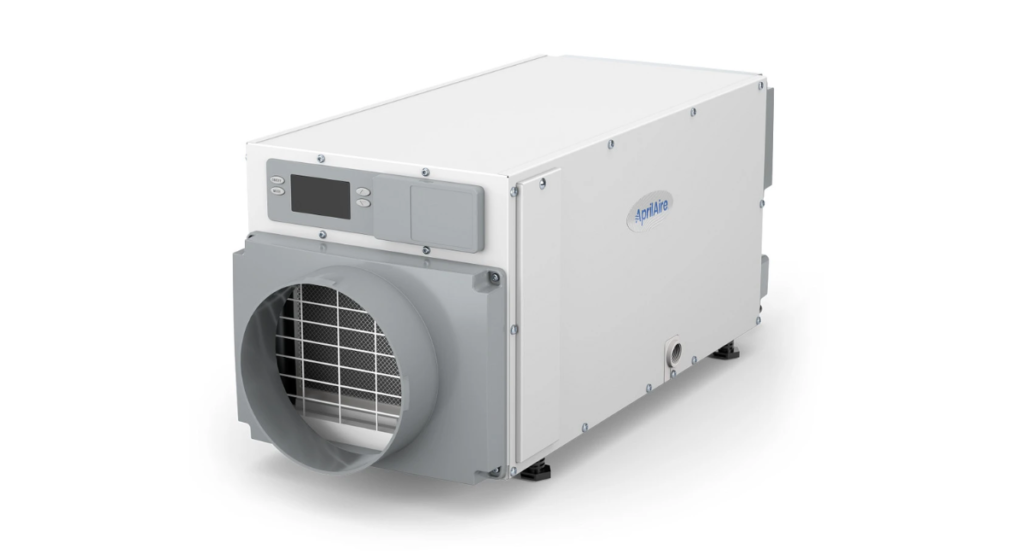
The Aprilaire E70 is the benchmark at this tier. It is a purpose-built whole-basement unit with a 5-year warranty, variable-speed fan, and a built-in condensate pump with 16-foot lift height, eliminating the need for a gravity drain setup. The Santa Fe Advance2 is a strong alternative; both units are sized and built for commercial-adjacent use where residential portables fall short. At this tier, the unit will likely outlast your ownership of the home if maintained correctly.
For basements of 2,500 sq ft or more, evaluate whether a whole-house ducted unit makes more sense than a high-capacity portable. A ducted system integrated with your HVAC will handle the entire home’s humidity in one pass. Read the full guide at Whole House Dehumidifier: When You Need One before committing to a portable unit at this scale.
Placement and Installation for Maximum Performance
Placement matters more than most buyers realize. A dehumidifier placed in a corner draws already-circulating air from one part of the room. Position it as close to the center of the basement as the drain hose allows, or at minimum not within 18 inches of a wall. The unit needs clearance on all sides for airflow: at least 12 inches on the sides and 6 inches at the rear intake.
For gravity drain setups, the unit must be elevated above the drain outlet. A small platform made from pressure-treated lumber or concrete blocks works. The drain hose must slope continuously downward with no loops or upward sections, or condensate will not drain and will back up into the reservoir.
If the basement has a sump pit, running the drain hose directly into it is the most reliable configuration. The water removed from the air goes directly to the sump and is pumped out through the same discharge line as groundwater. No manual emptying, no overflow risk.
For basements that flooded before, read Dehumidifier for Mold: Does It Actually Prevent Mold? before installing. A dehumidifier controls airborne humidity; it does not address liquid water intrusion from foundation failure or drainage problems. If your basement has had standing water, the waterproofing and drainage question needs to be resolved before a dehumidifier will be able to hold the humidity in a useful range.
The Connection to Atmospheric Water Generators
A basement dehumidifier and an atmospheric water generator share the same core refrigeration cycle: evaporator coil, condensate collection, compressor. The functional difference is what happens to that collected water. A dehumidifier discards it down a drain; an AWG filters and purifies it for drinking. If you have ever wondered where an AWG gets its water from, the answer is the same process your basement dehumidifier uses, with an added multi-stage filtration stack and UV disinfection at 40 mJ/cm².
For homeowners exploring off-grid water independence alongside humidity control, understanding the dehumidification principle is the fastest path to understanding atmospheric water generation. The two technologies are solving different problems with the same physics. See How Atmospheric Water Generators Work for the full explanation.
Frequently Asked Questions
How many pints does a basement dehumidifier need to be?
For basements under 1,000 sq ft at moderate humidity (50 to 60% RH), a 30-pint unit under the current DOE 2019 standard is the starting point. For basements of 1,000 to 1,500 sq ft, or any basement with readings consistently above 65% RH, a 45 to 50-pint unit is appropriate. Size up one tier if the basement is fully below grade. The full sizing table earlier in this article covers the calculation in detail.
Should I leave my basement dehumidifier on all the time?
No, but you should let the built-in humidistat control the runtime automatically. Set the target between 45% and 50% RH and let the unit cycle on when humidity rises and off when it drops to target. A correctly-sized unit will run 6 to 14 hours per day in summer without ever running continuously at 100% duty cycle. If your unit runs 24 hours a day without reaching the target set point, the unit is undersized for the moisture load, or there is an active water intrusion source that a dehumidifier cannot address.
Can I use a portable dehumidifier in my basement permanently?
Yes, with one modification: continuous drain. Any portable unit placed in a basement permanently needs a drain hose run to a floor drain or a built-in condensate pump. Without continuous drain, the reservoir fills in 8 to 12 hours, the unit shuts off, and you lose humidity control overnight. Most 30-pint and all 50-pint and above portable units include a rear drain port; you add the hose separately.
Will a dehumidifier help with a musty basement smell?
Musty basement odors almost always have a biological source: mold or mildew growing on organic materials at high humidity. A dehumidifier that holds RH below 50% will slow or stop new mold growth, and as existing surface mold dries out, the musty odor typically diminishes over 2 to 4 weeks. However, if you have visible mold on drywall, wood framing, or insulation, those materials need to be treated or removed; the dehumidifier controls the humidity that caused the growth, but does not kill established mold colonies.
What is the difference between a 30-pint and 50-pint dehumidifier in practice?
Under the DOE 2019 standard, a 30-pint unit removes 30 pints (roughly 3.75 gallons) of water from the air per 24 hours at the test conditions of 65°F/18.3°C and 60% RH. A 50-pint unit removes 50 pints (6.25 gallons). In a damp basement starting at 70% RH, the 50-pint unit will reach the 50% target roughly twice as fast as the 30-pint unit and will require less runtime to maintain that target once reached. The energy consumption difference is not proportional; a 50-pint ENERGY STAR unit is not twice as expensive to run as a 30-pint unit because it runs fewer hours to achieve the same result.
How long does it take a basement dehumidifier to work?
Initial drying of a basement starting at 70 to 80% RH takes 24 to 72 hours of continuous operation for a correctly-sized unit. After that initial drying phase, the unit cycles on and off to maintain target humidity, which is normal operation. If your basement is starting from very high humidity (above 80% RH) or has been wet for an extended period, the structural materials themselves are saturated and will continue releasing moisture; expect 4 to 7 days of near-continuous operation before humidity stabilizes in the target range.