
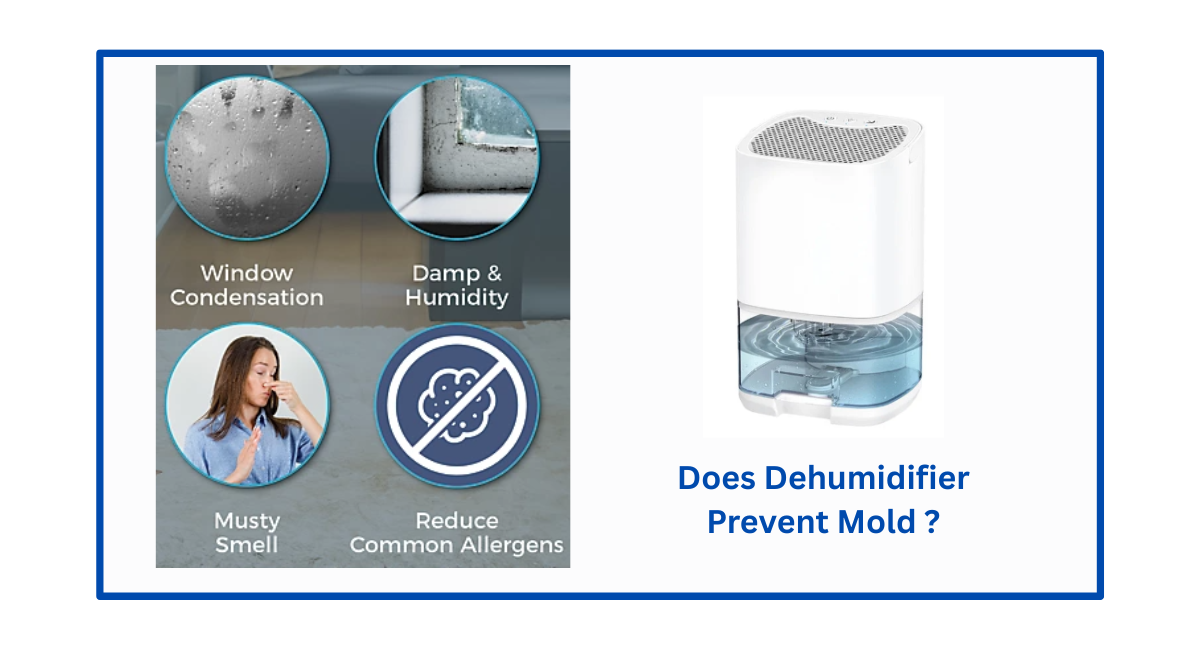
Quick Answer: A dehumidifier prevents mold by removing the moisture that mold needs to grow, but it does not kill existing mold colonies. The EPA identifies indoor humidity above 60% RH as the primary trigger for mold growth on organic surfaces; holding relative humidity below 50% removes the growth condition entirely. If you already have visible mold, remediate the affected materials first, then use a dehumidifier to prevent recurrence. A dehumidifier treating an unaddressed mold problem is treating a symptom, not the cause.
Key Takeaways
- Mold requires three things to grow: organic material (drywall, wood, carpet), a temperature between 40°F/4°C and 100°F/38°C, and relative humidity above approximately 60% for 24 to 48 hours. A dehumidifier eliminates only the third factor.
- The EPA recommends indoor RH between 30% and 50%. Mold growth slows significantly below 60% and becomes essentially impossible below 50% on most indoor surfaces.
- Visible mold is live organic growth. Turning on a dehumidifier does not kill it; it only removes the humidity that supports continued growth. Affected materials need physical remediation.
- The CDC links indoor mold exposure to respiratory illness, asthma exacerbation, and hypersensitivity pneumonitis, particularly in children, elderly individuals, and people with compromised immune systems.
- The sequence that works: fix the moisture source (waterproofing, plumbing, ventilation), remediate existing mold, then install a dehumidifier to maintain safe humidity levels and prevent recurrence.
When I get calls about basement mold, roughly half the homeowners have already bought a dehumidifier before they called. They ran it for two weeks, the mold did not go away, and now they want to know whether the unit is broken. It is not broken. They installed it in the wrong sequence. A dehumidifier is the last step in a mold response, not the first. Understanding why requires knowing exactly what mold needs and what a dehumidifier actually controls.
How Mold Actually Grows Indoors
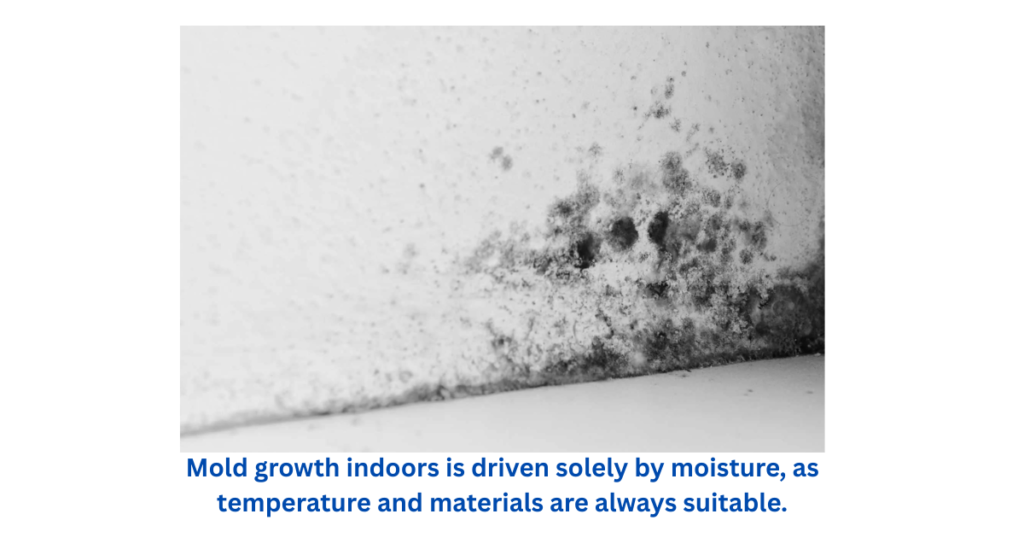
Mold spores are everywhere. Every cubic meter of indoor air in a typical home contains thousands of mold spores from dozens of species. The spores are inert; they do not grow unless conditions are right. Three things must align simultaneously: a substrate (material to grow on), temperature (most indoor molds grow between 40°F/4°C and 100°F/38°C, covering virtually every occupied indoor environment), and moisture. Indoor temperature is nearly always in range. Substrate is always present: drywall paper, wood framing, ceiling tile, carpet backing, cardboard. Moisture is the only variable you can actually control.
Mold does not need liquid water. It needs elevated relative humidity sustained over time. The threshold varies slightly by species, but the working rule cited in EPA mold guidance is that mold colonies can establish on organic surfaces within 24 to 48 hours of exposure to RH above 60%. At 70% RH and 70°F/21°C, common mold species including Cladosporium, Penicillium, and Aspergillus reach visible growth within 3 to 7 days on drywall paper.
The practical implication: mold problems in basements and crawl spaces are almost always moisture management failures, not cleaning failures. You can bleach visible mold off a surface, but if you return the surface to 70% RH, you are growing the same mold again within days.
What a Dehumidifier Does (and Does Not Do) for Mold
1- What It Does
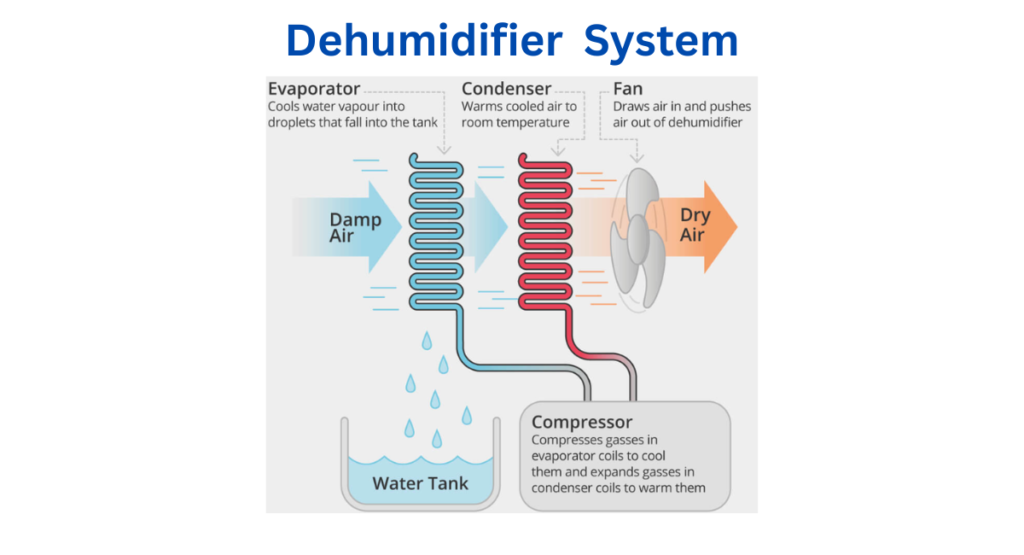
A dehumidifier removes water vapor from air. It draws humid room air across a cold evaporator coil, where moisture condenses and drips into a reservoir or drain. The drier air exits back into the room. By running continuously or on a humidistat cycle, it maintains ambient RH at a target level.
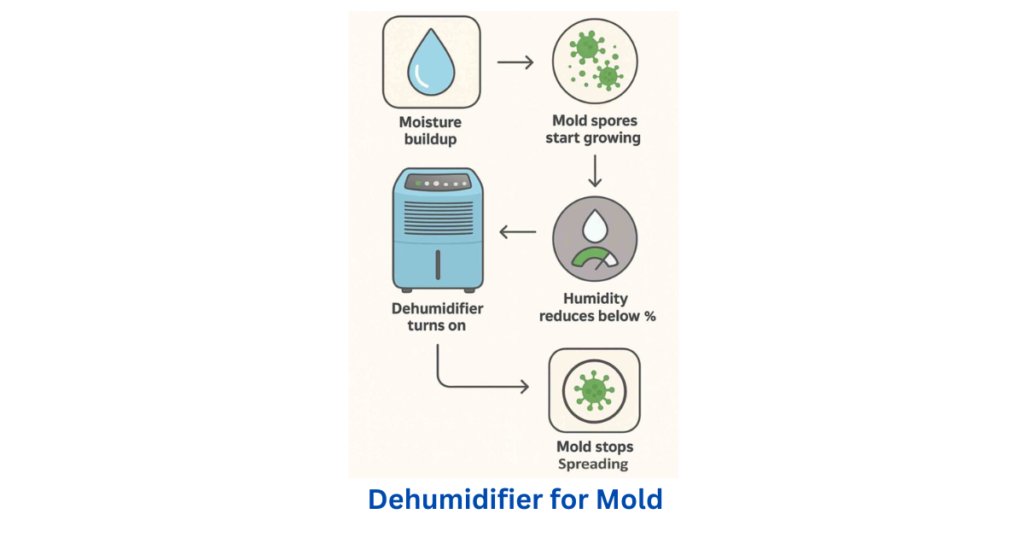
Below 50% RH, most common indoor mold species cannot establish new growth. At 45% RH, the moisture gradient between the air and any organic surface is low enough that even surfaces like drywall paper stay too dry to support germination. This is why the EPA’s indoor air quality guidance consistently targets 30 to 50% RH as the zone where biological contaminants are suppressed without making the air excessively dry.
A dehumidifier also dries out surfaces that have absorbed moisture. If drywall paper has been at 70% RH for a week without active mold growth yet, running a dehumidifier brings the surface back below the moisture threshold before colonies establish. This is where a dehumidifier is most effective: prevention and early intervention, before visible growth appears.
2- What It Does Not Do
A dehumidifier does not kill mold. Active mold colonies on drywall, wood, or insulation consist of live fungal mycelium embedded in the substrate material. Drying the air reduces growth rate and may cause surface colonies to become dormant, but dormant mold reactivates immediately when humidity returns above threshold. When humidity normalizes again (power outage, unit failure, open door in summer), the colonies resume growth from where they left off.
It also does not fix the moisture source. If water is entering through the foundation, a plumbing leak is adding moisture, or a crawl space is pulling humid air up through the floor, the dehumidifier is working against a continuous inflow. It may hold the RH at an acceptable level while running, but any lapse in operation leads to rapid moisture rebound.
The Humidity Targets That Matter
These are the thresholds that determine what mold can do in a space:
| RH Level | Mold Risk | Action |
|---|---|---|
| Below 50% RH | Minimal: most species cannot establish new colonies | Maintain with humidistat-controlled dehumidifier |
| 50–60% RH | Low to moderate: growth possible on very humid microclimates (behind furniture, in corners) | Improve air circulation, lower target to 48% |
| 60–70% RH | High: active mold germination within 24–48 hours on organic surfaces | Install dehumidifier immediately; inspect for existing growth |
| Above 70% RH | Very high: rapid colony establishment; visible growth within 3–7 days | Inspect for active mold first; remediate before running dehumidifier alone |
The 30% lower boundary matters too. Below 30% RH, the air is excessively dry: nasal membranes dry out, wood furniture and flooring crack and split, and respiratory symptoms increase in sensitive individuals. The target range is 35 to 50% for most occupied spaces, with 45% as a practical year-round set point.
When to Remediate Before Dehumidifying
If any of the following apply, visible mold remediation needs to happen before you rely on a dehumidifier as a solution:
- Visible mold growth on any surface, regardless of size. The EPA guideline for DIY cleanup is under 10 sq ft of mold on a non-porous surface. Larger areas or growth on porous materials (drywall, insulation, ceiling tiles) typically require professional remediation.
- Musty odor that persists after reducing humidity. Persistent musty smell in low-humidity conditions means the mold source is hidden: inside a wall cavity, under flooring, or in HVAC ductwork.
- Health symptoms (respiratory irritation, coughing, nasal congestion) that improve when leaving the home. This is a clinical sign of significant mold exposure and requires inspection, not just a dehumidifier.
- History of flooding or standing water. Water-damaged materials that were not properly dried within 24 to 48 hours of the event almost certainly have mold growth inside structural materials that surface cleaning cannot address.
For areas with visible mold under 10 sq ft on hard surfaces, EPA guidance supports owner cleanup with appropriate PPE (N95 respirator, nitrile gloves, eye protection). Mix no more than 1 cup of chlorine bleach per gallon of water, apply to the affected surface, let sit for 10 minutes, and scrub. Dry the area thoroughly. For porous materials like drywall or wood showing surface mold, physical removal and replacement is more reliable than surface treatment.
After remediation, run the dehumidifier to hold the space below 50% RH permanently. This prevents the conditions that allowed growth in the first place.
Choosing the Right Unit for Mold Prevention
For mold prevention specifically, the sizing rules are the same as any dehumidifier application: match capacity to the space size and moisture load, not to the mold problem itself. Mold prevention does not require a larger unit than humidity control requires. What it does require is consistent, uninterrupted operation, which means:
- Continuous drain capability (reservoir units shut off when full; see the full explanation in the Best Dehumidifier for Basement guide)
- A reliable auto-humidistat set to 45 to 50% RH
- A unit with a reputation for long-term reliability; mold prevention requires the unit to run correctly for years, not weeks
For crawl spaces, the situation is different from a finished basement. Crawl space humidity levels regularly exceed 80% in humid climates, and a standard portable dehumidifier is not designed for the physical conditions: low clearance, low temperatures, non-standard drainage requirements. Read the Crawl Space Dehumidifier guide if the mold concern is in an encapsulated or vented crawl space.
For basements, the full sizing guide with capacity recommendations is in the Dehumidifier Hub.
Water Quality and Mold: Where the Topics Intersect
Mold and indoor water quality are connected in one specific way that is easy to overlook: dehumidifier condensate. The water a dehumidifier removes from a moldy basement has been exposed to mold spores and coil surfaces that may harbor bacteria. It is not potable. If you are considering collecting dehumidifier condensate for any use beyond drain disposal or watering plants, the water needs treatment.
Atmospheric water generators address this problem differently: they are designed from the ground up to produce potable condensate, with multi-stage filtration (sediment pre-filter, activated carbon block) and UV disinfection at 40 mJ/cm².
For homeowners exploring water independence alongside humidity control, the AWG article at How Atmospheric Water Generators Work explains both technologies in the same framework.
Frequently Asked Questions
Will a dehumidifier get rid of mold?
A dehumidifier will not eliminate existing mold. It removes the moisture that mold needs to grow, which stops new growth and may cause surface colonies to become dormant. Active mold colonies on drywall, wood, or other materials need to be physically removed or treated. The dehumidifier’s role is prevention and maintenance after remediation, not treatment of established mold.
What humidity level kills mold?
No humidity level kills mold; it only prevents or slows growth. Below 50% RH, most common indoor mold species cannot establish new colonies. Below 35% RH, dormant spores remain inert but are still viable and will resume growth if humidity rises again. The practical goal is sustained humidity below 50% RH, achieved through consistent dehumidifier operation, not through extreme dryness.
How long does it take for a dehumidifier to stop mold growth?
Once a dehumidifier brings RH below 50% in the affected space, conditions are no longer favorable for new mold germination. That typically takes 24 to 72 hours of continuous operation from a starting point of 70 to 80% RH, depending on unit capacity, space size, and how much moisture is embedded in the structural materials. Growth of existing colonies slows as surfaces dry but does not reverse; the colonies need physical removal regardless of how low humidity drops.
Can mold come back after using a dehumidifier?
Yes, if the dehumidifier is turned off or fails, or if the underlying moisture source is not fixed. Mold spores are always present in the air; they will germinate on any surface that stays above 60% RH for 24 to 48 hours. Consistent dehumidifier operation is required year-round in humid climates, not just during summer months. A power outage, a full reservoir that shut the unit off, or a unit that fails in late spring can allow conditions for rapid mold establishment in the weeks before you notice.
Is mold dangerous even if you cannot see it?
Yes. Hidden mold inside wall cavities, under flooring, or in HVAC systems can cause respiratory symptoms in occupants without being visible. Mold behind drywall is a common finding after water intrusion events that were not fully dried within 24 to 48 hours. If you have persistent unexplained respiratory symptoms at home that improve when you leave the building, that is a clinical indicator worth investigating with a professional mold inspection rather than attributing to humidity alone.