
If you’re researching residential atmospheric water generators, you’ve probably hit a wall. The commercial units cost $2,500 to $5,000. The DIY guides online are either too thin to act on or too technical to follow. And nobody seems willing to tell you, in plain English, which path actually fits a normal household budget.
Quick Answer
A residential atmospheric water generator (AWG) produces 5–30 gallons of drinkable water per day by condensing humidity from the air. Three buying paths exist: commercial off-the-shelf units ($1,500–$5,000), DIY blueprint builds (roughly $500 total), and scratch builds for engineers. For most hands-on homeowners in moderate-to-humid climates, the DIY blueprint delivers the same daily output as a commercial unit at roughly one-fifth the cost.
This page is the practical answer. It compares the three real ways to own a residential AWG, with cost data, yield math, climate constraints, and the trade-offs each option carries. No hype. Real numbers. The analysis I’d give a friend asking which path to take.
If you want the broader technology context first, our complete guide to water from air sets the foundation. This page assumes you already understand what an AWG is and you’re choosing what to buy.
Key Takeaways
- A residential AWG produces 5–30+ gallons of drinkable water per day from humidity in your air.
- Three buying paths: commercial ($1,500–$5,000), DIY blueprint ($400–$600), or scratch build ($300–$500 plus serious time).
- The DIY blueprint wins on cost, control, and upgradeability for hands-on homeowners.
- Yields fall sharply below 30% humidity. Coastal and temperate climates are ideal.
- The DIY path supports solar from day one.
What Is a Residential Atmospheric Water Generator?
A residential atmospheric water generator is a household-scale machine that pulls humid air across a refrigerated coil, condenses the moisture into clean water, and filters it for drinking. The fundamental physics is the same as your refrigerator or air conditioner. The difference is engineering intent: instead of treating condensation as waste, the unit captures and purifies it.
Daily output ranges from 5 to 30+ gallons for residential models, depending on the unit and your local climate. That covers drinking and cooking for a family of four, often with surplus.
For the engineering side (the cooling cycle, the filter stack, why some designs outperform others by 3x), see our breakdown of how atmospheric water generators work. This guide focuses on the buying decision.
Why Interest Is Exploding in 2026
Three forces converged in the last few years, and the result is that more households are seriously evaluating residential AWGs than at any prior point.
Water supply got less reliable. Hurricanes have disabled municipal supply for two to three weeks across multiple U.S. regions. FEMA tracks boil-water advisories somewhere in the country every month. The 2022 Jackson, Mississippi water-system failure left 150,000 people without usable water for nearly six weeks.
Water quality got worse, or at least better-measured. PFAS, microplastics, and aging lead service lines turned “tap water is safe” into a more complicated sentence. A 2023 USGS study found PFAS in 45% of U.S. tap water samples. Read our analysis of whether tap water is safe to drink for the full picture.
The technology got cheaper. Compressor and refrigeration components rode the same cost curve as solar. A unit that cost $10,000 a decade ago costs $1,500–$5,000 today, and DIY-friendly designs have pushed the price floor below $500. The economics finally make sense for ordinary households.
The 3 Real Paths to Owning One
Path 1 · Premium
Commercial Off-the-Shelf Unit · $1,500–$5,000
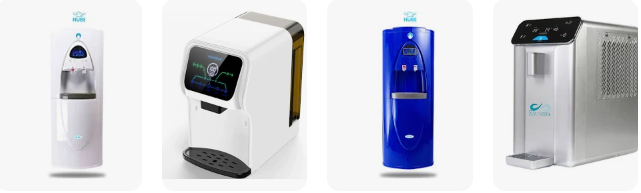
The plug-and-play option. Order a unit from a manufacturer, unbox it, plug it in, fill the storage tank, drink water. Warranties run 1–5 years, customer support handles troubleshooting, replacement filters ship on subscription.
Best for: households that want zero hands-on work and value warranty over savings. The trade-off: 3–5x what the components cost, proprietary parts, limited repair path.
Path 2 · Smart Middle
DIY Blueprint + Off-the-Shelf Parts · $400–$600 Total
You purchase a documented blueprint (build instructions, parts list, sourcing recommendations, walkthrough videos), then assemble the unit yourself from components you source separately. Total investment lands at $400–$600, about 70% less than a commercial equivalent producing similar output.
Best for: hands-on homeowners, off-grid families, anyone who has assembled IKEA furniture and replaced a light switch. The trade-off: one or two weekends of build time, self-supported troubleshooting.
Path 3 · Advanced
Scratch Build from Engineering Spec · $300–$500
No instructions. You design your own cooling system, source components, write your own filter specification, troubleshoot every problem alone. Cheapest in dollars, most expensive in time and skill.
Best for: mechanical or electrical engineers, refrigeration techs, serious tinkerers. Roughly 5% of readers.
Commercial vs. DIY Blueprint: Side-by-Side
| Factor | Commercial | DIY Blueprint |
|---|---|---|
| Total cost | $1,500–$5,000 | $400–$600 |
| Daily yield | 5–10+ gal | 5–10+ gal |
| Build time | None | 8–16 hrs |
| Skill required | None | Basic DIY |
| Warranty | 1–5 yrs | Self-supported |
| Upgrade / repair | Proprietary | Off-the-shelf |
| Solar-ready | Some models | By design |
The day you stop checking the water-supply news is the day you understand why people build this themselves.
What to Look For (Whether You Buy or Build)
Three numbers tell you almost everything about a residential AWG. Demand them from any manufacturer or blueprint provider before you commit:
- Yield at 50% humidity / 80°F. The standard testing condition. If a manufacturer doesn’t disclose this number, that’s a red flag. Coastal Florida doubles spec; Phoenix cuts it 70%.
- Continuous power consumption. Determines solar compatibility and cost per gallon. 200–400W is normal for a 5 gal/day unit. Above 600W signals an inefficient cooling stage.
- Filtration stack. Minimum: sediment pre-filter, activated carbon, UV sterilizer. If they skip UV, walk away. Bacteria develop on cooling coils, and only UV reliably handles that risk.
Secondary considerations: compressor warranty length, off-the-shelf vs. proprietary filter replacements, noise level, and explicit solar configuration support.
DIY Atmospheric Water Generator: What’s Actually Involved?
For the DIY blueprint path specifically (the path that delivers the best value for most readers), here’s exactly what you’re signing up for. No surprises.
8–16h
Build time
1–2 weekends
~$500
Total cost
Blueprint + parts
5–10
Gallons/day
Moderate humidity
Skills required. Comfort with hand tools, basic wiring (difficulty level: replacing an electrical outlet), and patience to follow detailed instructions. If you’ve assembled IKEA furniture and changed a light switch, you have the skills.
Cost breakdown for a realistic build:
- Blueprint and instructions: ~$40
- Compressor and refrigeration components: $150–$250
- Fan, housing, mounting hardware: $50–$100
- Filtration stack (carbon, UV, sediment): $80–$150
- Wiring, switches, connectors: $30–$60
- Total parts cost: $310–$560
What you end up with: a compact unit roughly the size of a small dorm fridge, producing 5–10 gallons of clean drinking water per day in moderate humidity. Every component is off-the-shelf. When filters need replacing or a part wears out, you replace it in minutes for a few dollars.
To see what a real build looks like start-to-finish, our DIY off-grid water system guide walks through the broader system architecture this fits into.

Off-Grid and Portable Variants
Off-grid water generators are AWGs designed to pair with solar power. A 5-gallon-per-day unit needs roughly a 600–1,200W dedicated solar array plus a 200+ Ah battery bank for continuous off-grid operation. The DIY blueprint path supports off-grid configurations from the start.
Portable atmospheric water generators are smaller units (1–3 gallons per day) designed for RVs, cabins, or emergency situations. They typically aren’t the right fit for replacing a household supply, but excel as backup, mobile, or supplemental units. Expect $400–$800 for a quality portable unit.
Climate Considerations
The single most important fact most marketing material glosses over: humidity determines yield, and yield is what you’re actually buying.
| Humidity | Yield (5 gal/day unit) | Verdict |
|---|---|---|
| Below 20% | Near zero | Not viable |
| 20–30% | 1–2 gal/day | Hybrid needed |
| 30–50% | 3–5 gal/day | Spec performance |
| 50–70% | 5–8 gal/day | Ideal |
| 70%+ | 8–12 gal/day | Optimal |
If you’re below 30% humidity year-round, see our breakdown of the best off-grid water systems compared for alternatives.
Real 5-Year Costs
| Path | Initial | Electricity (5yr) | 5-Year Total |
|---|---|---|---|
| Commercial | $2,500 | $1,800 | $4,700 |
| DIY Blueprint | $500 | $1,200 | $2,000 |
| Scratch Build | $400 | $1,200 | $1,900 |
The DIY blueprint path produces the same daily yield as the commercial unit at less than half the 5-year total cost. The scratch build saves another $100 but typically costs 10–20x more time. The math points clearly to the middle path for most households.
The Verdict: Who Should Buy What
Commercial
- Want plug-and-play
- $2,500+ budget
- Value warranty over savings
DIY Blueprint
- Hands-on owner
- $500–$600 budget
- Want full control
- Solar-ready
Scratch Build
- Engineer-level
- Weeks of time
- ~5% of readers
For the vast majority of readers, hands-on homeowners with moderate budgets, the DIY blueprint is the strongest path. Same end result. Far lower cost. You understand the system. And it’s solar-ready from day one.
Keep Reading
- How Atmospheric Water Generators Work — engineering side, in plain English.
- How to Make Water From Air at Home — five methods compared, from $0 to commercial-scale.
- Best Off-Grid Water Systems Compared — AWG vs. wells, rainwater, surface water.
- DIY Off-Grid Water System for Beginners — the broader system AWGs fit into.
Frequently Asked Questions
How much does a residential atmospheric water generator cost?
A residential atmospheric water generator costs $1,500–$5,000 for commercial off-the-shelf units, $400–$600 total for a DIY blueprint build, or $300–$500 for a scratch build by an experienced maker. Pricing scales with daily yield (gallons per day) and build complexity.
How much water does a residential AWG produce per day?
A residential AWG produces 5–10 gallons of drinking water per day at standard test conditions (50% humidity, 80°F). Output rises to 8–12 gallons in coastal climates above 70% humidity and falls below 2 gallons in arid regions below 30% humidity.
Can a residential AWG run on solar power?
Yes. A 5-gallon-per-day residential AWG needs roughly 600–1,200W of dedicated solar plus a 200+ Ah battery bank for continuous off-grid operation. DIY blueprint builds support solar configurations from day one; commercial models vary.
Is water from an atmospheric water generator safe to drink?
Yes, with basic filtration. Water from air starts cleaner than most municipal supplies. Any home unit needs a sediment pre-filter, activated carbon filter, and UV sterilizer to handle dust, biofilm, and bacteria that can develop on cooling coils.
How long does a residential AWG last?
Quality consumer atmospheric water generators last 8–12 years. The compressor is the most common failure point, typically backed by a 5-year warranty on serious commercial units. DIY builds last as long as their individual components, all of which are replaceable.
Does an atmospheric water generator work in dry climates?
Performance drops sharply below 30% relative humidity. In arid regions, you need a larger unit, more energy input, or a hybrid strategy combining AWG with rainwater catchment or a well source. AWGs work best in coastal or temperate climates with humidity consistently above 40%.
The Takeaway
A residential atmospheric water generator is no longer a survivalist fantasy. It’s a working, mature technology that fits ordinary households in moderate-to-humid climates. The only real question is which path matches your situation.
For most readers, the middle path is the answer. Same water. Same daily yield. Same long-term reliability. A fraction of the spend, plus complete understanding and control of the system you’re depending on. That’s the trade most hands-on homeowners would happily make. The only thing standing between most of them and a working unit is the decision to start.
Sources & Further Reading
- U.S. Geological Survey: PFAS detected in 45% of U.S. tap water samples (2023 study)
- U.S. EPA: PFAS in drinking water regulatory page
- EPA: Lead and Copper Rule (drinking water standards)
- FEMA Ready.gov: Water emergency preparedness guidance
- CDC: Drinking water safety and contamination


Leave a Reply